


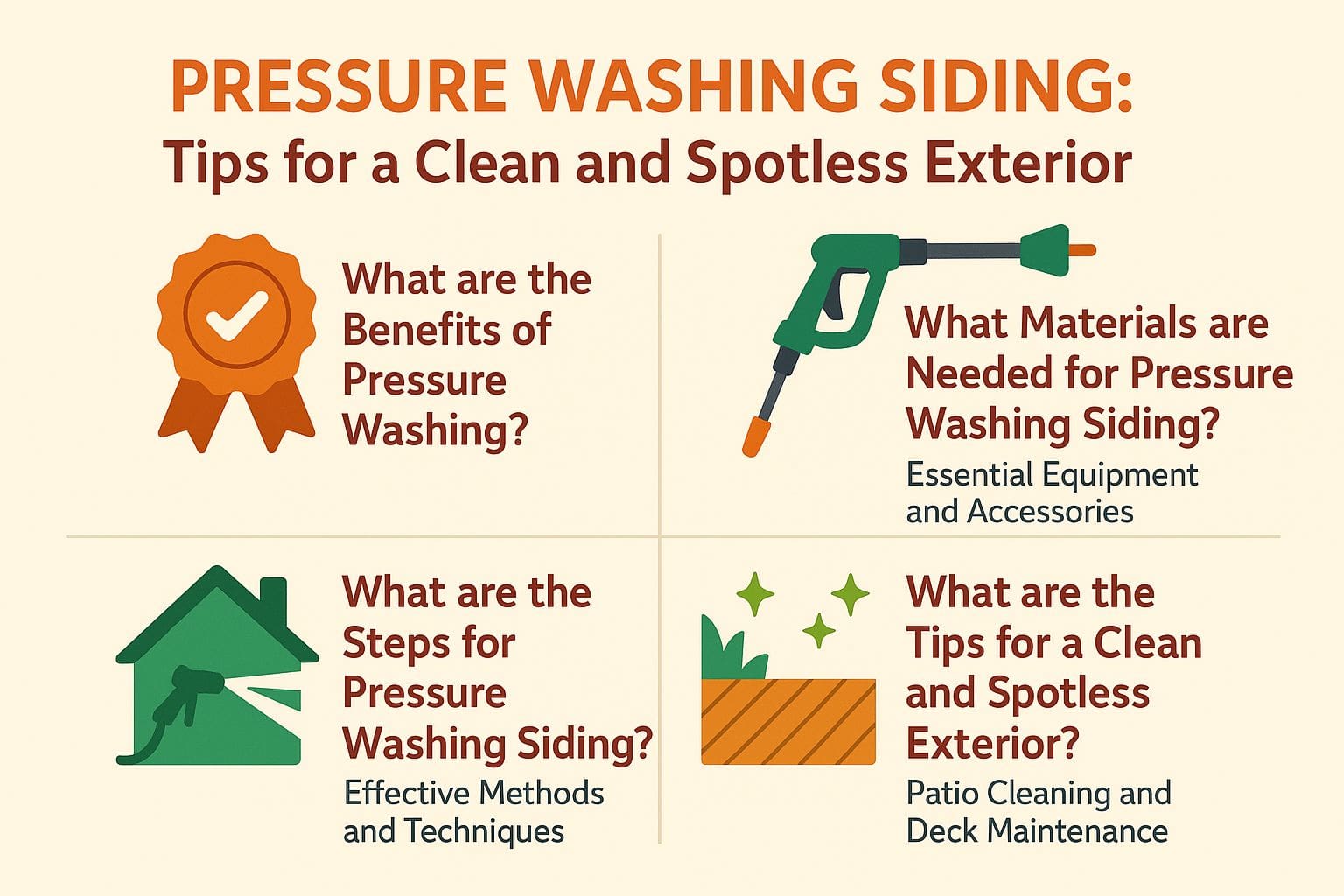
Pressure Washing Siding: Tips for a Clean and Spotless Exterior
Pressure washing is a great way to give your home’s exterior a fresh look, improving its appearance and providing protection. long-term damage.
This guide looks at the many benefits of pressure washing siding Cleaning dirt and stains to improve your home’s curb appeal.
It also discusses the necessary materials, step-by-step procedures, and tips for achieving a spotless finish. Whether you’re a DIY enthusiast or looking to hire a professional, this information will help you with a successful pressure washing project.
What are the Benefits of Pressure Washing?
Pressure washing is a key method to keep your home in good shape, providing various benefits by making it look better, last longer, and cleaning surfaces well.
By using pressure washing, homeowners can achieve a clean exterior that removes dirt and grime while helping to keep materials like vinyl, wood, and aluminum in good condition.
Using a pressure washer regularly can prevent costly repairs, improve your home’s appearance, and make it inviting to guests and those passing by. This can greatly improve the view of your property from the street and raise its value.

1. Removes Dirt and Stains with Effective Methods
One of the most significant benefits of pressure washing is its effectiveness in removing stubborn dirt and stains from various surfaces around the home, including siding, driveways, and patios.
Pre-soaking with a specific cleaning product before the main cleaning step helps in removing dirt more easily. This method allows the cleaning agent to penetrate and break down tough stains, such as oil, mildew, and algae, which can be particularly challenging to eliminate.
Picking the right cleaning product for a specific stain is very important to get the best results. For instance, products designed for grease can effectively target stains found on driveways, while others may specifically address mold growth on siding.
Homeowners must know the correct methods and materials to refresh their outdoor areas.
2. Prevents Damage to Siding and Improves Siding Lifespan
Regular pressure washing is important for avoiding harm to your siding. It removes mildew, mold, and other harmful substances that can weaken different siding materials.
If you don’t keep up with this important maintenance, your paint can peel, wood can rot, and siding can warp. This can end up being expensive to fix and your siding won’t last as long.
Over time, dirt and grime accumulate, trapping moisture and allowing damaging bacteria like mildew, algae, and mold to thrive. By engaging in consistent seasonal maintenance, homeowners can proactively safeguard their investment.
Professional pressure washing is important because it helps maintain your home’s look, stops the siding from breaking down over time, and allows for effective cleaning.
Regular cleaning helps maintain the materials’ durability and appearance, ensuring they remain in optimal condition for years to come.

3. Increases Curb Appeal and Home Improvement
Cleaning the outside of a house makes it look much better, and using a pressure washer is an excellent method to achieve a spotless look, enhancing its visual charm.
When potential buyers or visitors first arrive, the immediate impression created by the exterior often determines their overall perception of property value and neighborhood charm. A clear comparison shows how effective pressure washing is-it clears away years of dirt, grime, and plant buildup from surfaces, letting the real beauty of the home become visible.
To keep your home looking good and to get the best results from exterior cleaning, it’s a good idea for homeowners to pressure wash at least once a year, especially in places that face rough weather. Factors such as high humidity or being close to trees may require you to clean surfaces more often. Adjust how often you pressure wash based on the weather.
4. Saves Time and Effort with Efficient Cleaning
Pressure washing helps homeowners clean quickly and easily, saving time and work compared to regular cleaning ways, making it a handy option for keeping homes tidy.
This is particularly true when tackling stubborn dirt and grime that manual scrubbing struggles to remove.
Unlike conventional cleaning, which can take hours and often yields mediocre results, pressure washing uses high-pressure water jets to blast away debris quickly and thoroughly.
Homeowners are presented with two main options: they can either invest in a DIY pressure washer for occasional use or hire professional services for optimal results and convenience, considering cost estimation and consumer preferences.
Doing it yourself works well for small tasks, but hiring experts is helpful for bigger jobs or complex details.
Using a pressure washer to clean your surfaces twice a year improves their appearance and durability. It’s important to use proper tools to clean safely and effectively without harming the property, following job safety and consumer safety guidelines.
What Materials are Needed for Pressure Washing Siding? Essential Equipment and Accessories
To effectively wash your siding with a pressure washer, gather the necessary items for a safe and complete cleaning.
You’ll need:
- A quality pressure washer
- Cleaning solutions suitable for vinyl, wood, or aluminum siding
- Safety gear
- A stable ladder
- A dependable hose
While preparing your tools, it’s also worth considering the potential costs involved in maintaining and upgrading your home exterior. For instance, understanding how much siding costs for a 1500 square-foot house can help you budget for future home improvements.

1. Pressure Washer and Necessary Accessories
The pressure washer is the cornerstone of any effective pressure washing operation, as it provides the necessary water pressure to remove dirt and grime from various surfaces.
This strong tool is available in different models, each suited for particular cleaning jobs.
For instance, electric pressure washers are ideal for light cleaning jobs like washing cars and patios, while gas-powered versions offer higher water pressure for more demanding tasks, such as stripping paint or cleaning large driveways.
It’s important to look at the specifications, such as pressure ratings in PSI (pounds per square inch) and GPM (gallons per minute), to pick the right model.
Various pressure settings can be adjusted for different cleaning needs, enhancing cleaning effectiveness and efficiency. Lower settings are great for delicate siding materials, while higher settings effectively tackle tough builds like mildew or oil stains on more durable surfaces.
2. Cleaning Solution and Eco-Friendly Products
Choosing the right cleaning product is important for getting the best results when pressure washing siding, as it helps remove tough stains and dirt.
Knowing the different cleaning solutions available, including eco-friendly products, can greatly improve how well pressure washing works. Eco-friendly options are becoming more common, featuring biodegradable ingredients that are safe for the environment but still clean effectively.
When preparing to clean, it’s beneficial to pre-soak surfaces with a suitable solution, allowing it to penetrate and loosen dirt before the actual pressure washing begins.
Effective detergent application involves using the right dilution ratios and ensuring even coverage to maximize dirt removal, leaving surfaces pristine and well-maintained.
3. Protective Gear for Consumer Safety
When pressure washing, safety should always come first, so you need to include protective gear in your cleaning kit.
To keep the operator safe, it is important to have goggles, gloves, and non-slip shoes.
Goggles protect the eyes from debris and high-pressure water jets, which can cause serious injuries. Heavy-duty gloves provide grip and guard the hands against chemical exposure, as well as potential skin abrasions from the powerful spray.
Wearing shoes with good grip is important for keeping your footing on wet floors, reducing the risk of slipping and getting hurt.
It’s important to follow best practices like maintaining a firm grip on the pressure washer, standing firm on stable ground, and keeping onlookers at a safe distance to minimize accidents while operating this powerful cleaning tool.

4. Ladder for Safe Access to Exterior Surfaces
A sturdy ladder is often necessary for reaching high areas when pressure washing siding, ensuring that all surfaces receive thorough cleaning.
Picking the correct ladder makes work quicker and much safer during cleaning tasks. Choosing the right ladder keeps you steady and reduces the chances of falling, which can cause bad injuries.
When using a ladder, make sure it’s on a stable surface, and have someone nearby to help. Regular maintenance of the ladder, such as checking for any loose screws or signs of wear, can extend its lifespan and safety.
Cleaning the surface by getting rid of dirt and rubbish before pressure washing can result in a more effective clean, following preparation steps for optimal results. This helps the siding last longer and decreases how often it needs upkeep.
5. Hose and Nozzle Types for Cleaning Performance
The hose is an essential part of your pressure washing setup. It links your pressure washer to the water supply and provides the required water flow.
A good system needs the correct hose type. Options include rubber and PVC, each suited for different pressure washer requirements.
Rubber hoses are often stronger and can handle high heat, which makes them good for tough tasks. Meanwhile, PVC hoses are lightweight and often more affordable, ideal for casual use.
Managing hose lengths is important; longer hoses can lower pressure and performance, so keep the hose length practical.
Using water carefully saves resources and cleans well, reducing harm to the environment.
What are the Steps for Pressure Washing Siding? Effective Methods and Techniques
Cleaning your siding with a pressure washer involves a series of careful steps that lead to a clean surface and long-lasting results.
By following these steps, you can change how your home looks and keep your siding in good condition.
Begin by getting your work area ready with professional-grade equipment and washing techniques. Make sure you have all the cleaning tools and safety gear you need, and think about setting up a cleaning plan to keep your home’s exterior in excellent shape.
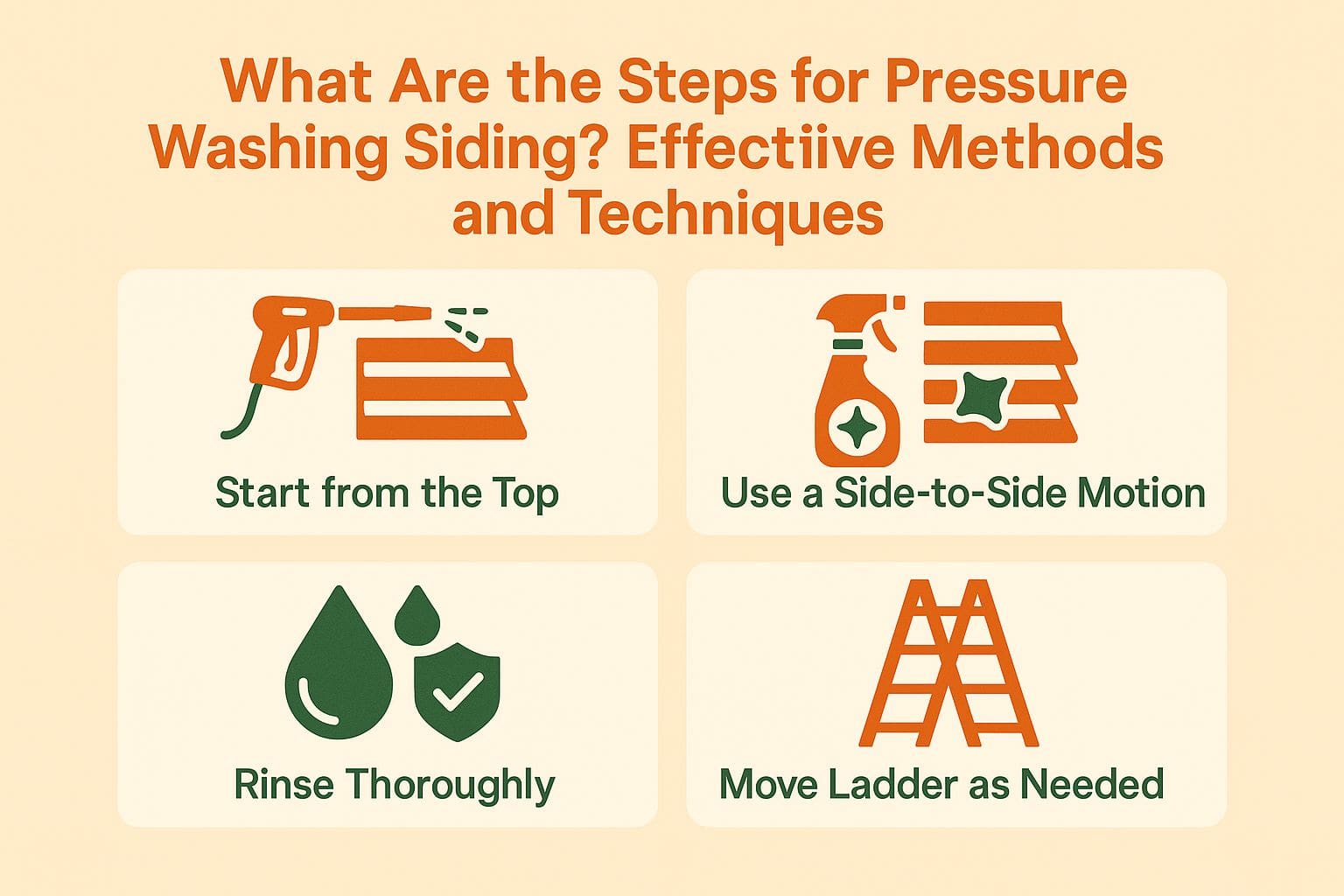
1. Start from the Top: Washing Techniques and Safety Precautions
Starting at the top when pressure washing siding is useful because gravity helps the cleaning process and prevents dirty water from dripping onto spots you have already cleaned.
This method improves cleaning and reduces streaks and leftover marks.
Point the high-pressure spray downwards to protect surfaces. This way, dirt and debris are fully washed off, rather than being moved to areas that are already clean.
For optimal results, it’s essential to prepare the surface beforehand by removing any loose debris, covering electrical outlets, and ensuring that windows and doors are tightly sealed.
Keeping the same distance from the surface while washing is important. This guarantees thorough cleaning and reduces the chance of damage, regardless of the siding type.
2. Use a Side-to-Side Motion: Cleaning Agents and Residential Siding
Shifting the pressure washer from left to right helps clean siding evenly and removes dirt well, ensuring the task is completed fully.
This method helps achieve even results and stops streaks and patches that can appear when cleaning without a plan.
Maintaining a steady pace allows the pressure washer to have consistent contact with the surface, further enhancing the dirt removal efficiency.
To get better cleaning results and remove stains, soak the area first with a cleaner that matches the surface you are cleaning, especially for hard-to-remove stains.
Utilizing the appropriate nozzle and adjusting the pressure settings according to the material being cleaned will help prevent damage while ensuring optimal dirt removal.
3. Rinse Thoroughly: Post-Wash Care and Maintenance Schedule
After applying cleaning solutions and pressure washing, it’s essential to rinse thoroughly, ensuring no residues are left that could damage your siding or harm the environment.
Effective rinsing involves using the appropriate water pressure, considering water usage, to avoid any potential injury or damage to delicate surfaces. It’s advisable to adopt a sweeping motion, allowing water to flow uniformly across the treated area.
When rinsing near fields or water sources, it’s important to follow safety measures to avoid runoff that could harm local plants and animals. Keeping a safe distance and using environmentally friendly rinsing methods can prevent chemicals from affecting the area, helping you keep your environment intact while getting a clean result.
4. Move Ladder as Needed: Safety Precautions and Maintenance Tips
When using a pressure washer, make sure to reposition the ladder to clean all parts of your siding safely and securely.
It’s essential to be mindful of the ground surface where the ladder will rest; if the ground is uneven or soft, consider using a ladder stabilizer or leveling the surface for better support.
Make sure the ladder is on a stable, even ground and don’t stretch too far, as this might cause you to fall.
When used correctly, a ladder can make your cleaning tasks easier by helping you reach high or hard-to-reach places, improving the process and resulting in less frequent cleaning and longer-lasting siding.
What are the Tips for a Clean and Spotless Exterior? Patio Cleaning and Deck Maintenance
Getting a clean and spotless exterior involves more than pressure washing. It requires following specific tips and practices that improve the cleaning process and protect your siding.

1. Use the Right Nozzle: Pressure Washing Accessories and Surface Types
Selecting the right nozzle type is essential for achieving optimal cleaning performance and pressure washing efficiency when tackling different surfaces.
There are different nozzle types, each made to create specific spray patterns, which can significantly affect how well you clean.
For instance, a wide spray pattern is excellent for rinsing large areas quickly, while a narrow stream is more effective for removing tough grime from hard-to-reach spots.
The choice of nozzle should align with the texture and material of the siding, whether vinyl siding, wood siding, brick siding, or composite siding; softer materials, like wood, may require lower pressure and wider spray to avoid damage, whereas tougher surfaces, like brick or concrete, can handle more concentrated streams.
To get the best results, check both the surface and its cleaning needs before choosing a product.
2. Test Pressure on a Small Area: Performance Comparison and Long-Term Care
Before doing a complete pressure wash, test the pressure on a small part of your siding to make sure the settings are correct and won’t cause harm, ensuring investment protection.
This initial check helps maintain the quality of the material and improves how well the washing process works.
By looking closely at how different siding materials react to different pressure levels, one can learn important information about the right methods to use.
For instance, while vinyl siding can often withstand higher pressure settings, wood or painted surfaces might require gentler approaches to avoid stripping paint or damaging the wood fibers.
It’s important to learn about each material’s features and change the pressure washer settings to get the best results and make the siding last longer.
3. Work in Sections: Cleaning Checklist and Seasonal Cleaning
Cleaning small sections when pressure washing helps you concentrate and ensures you cover every part of the area.
This approach allows individuals to concentrate on one part at a time, ensuring each section receives the attention it requires.
Splitting the cleaning tasks into smaller parts makes it simpler to see how much has been done and stick to a regular cleaning schedule, which is important for lasting results.
To make the pressure washing process more efficient, start from the top and work your way down to prevent dirt from getting onto areas you’ve already cleaned. Using appropriate attachments for different surfaces can maximize effectiveness and minimize application time, leading to a more satisfying and rewarding cleaning experience.
4. Use a Brush for Tough Stains: Deep Cleaning and Industry Practices
For stubborn stains that resist pressure washing alone, using a brush can provide the extra scrubbing power needed to achieve a clean surface.
Choosing the right brush is important for good results. Options include soft bristles for gentle surfaces and stiff brushes for tough dirt.
To maximize the effectiveness of this cleaning process, it’s important to combine brushes with suitable cleaning agents, such as detergent or specialized stain removers. When you use cleaning products, spread them evenly on the stain and let them soak in before you start scrubbing.
Move in circular patterns to cover more area, and change how hard you press based on the surface. Combining pressure washing with hand scrubbing results in clean and renewed outside surfaces.
5. Rinse Windows and Doors: Cleaning Duration and Outdoor Spaces
After pressure washing your siding, it’s important to rinse nearby windows and doors to remove any cleaning residues that could lead to streaks or damage.
This step is important for both keeping the windows and doors looking good and ensuring they stay strong and functional. Residual detergent and dirt can create an unappealing film, obstructing clear views and potentially causing long-term harm to seals and finishes.
When planning a cleaning schedule, make sure to rinse right after pressure washing so the chemicals don’t dry on surfaces.
Make safety a top concern: use a strong ladder for reaching high places, and wear safety glasses to protect your eyes from debris. This helps make cleaning efficient and safe.
6. Dry Siding with a Towel: Maintenance Costs and Cleaning Frequency
To get a streak-free finish, use a towel to dry the siding after pressure washing. This helps remove leftover water spots and gives a clean appearance.
This easy and effective method improves the look of the home’s exterior and helps keep the siding in good condition. After pressure washing, moisture can linger in crevices, which might lead to issues such as mold or mildew growth if left unattended.
To effectively dry the siding, it’s recommended to use microfiber towels, as they are highly absorbent and gentle on surfaces. Dividing the work into parts makes it easier to handle and helps avoid missing any areas, which helps maintain the cleaning results for a longer time.
7. Clean Gutters and Downspouts: Driveway Washing and Industry Standards
Cleaning gutters and downspouts is an essential part of maintaining a clean exterior, as debris buildup can lead to water damage and affect the efficiency of your pressure washing efforts.
If gutters are not cleaned, they can overflow during heavy rain. This can cause ugly stains on walls and pavements and may lead to mold growth and attract pests.
Regularly cleaning gutters and downspouts is important. It helps keep them working well, which protects your home’s foundation and landscaping.
Ideally, homeowners should inspect and clean these areas at least twice a year, perhaps in the spring and fall, to address seasonal debris effectively.
For effective cleaning, using tools like a scooping tool or a garden hose with a high-pressure nozzle can help dislodge stubborn clogs, while pressure washing should be done with care to avoid pushing debris back into the system.
About the Author:
Mark Ellington is a home improvement expert and CEO of a $50M remodeling firm. With 20+ years of experience and a degree in Construction Management from Purdue, he shares practical renovation tips, pricing insights, and contractor advice at 5Estimates.com to help homeowners make smart, informed decisions on their projects.