



Why Is My AC Blowing Weak Air? 10 Fixes You Can Try Today
Is your air conditioner struggling to keep you cool? Weak airflow can turn your home comfort into frustration due to poor ventilation. It’s important to know the causes, like limited or blocked airflow, because ignoring them might result in larger issues. In this guide, you’ll learn about typical problems like dirty air filters, clogged ducts, and compressor issues, along with ten practical solutions you can try today. Ready to restore that refreshing breeze and improve system performance? Let’s dive in!
Overview of Weak Airflow Issues
Weak airflow manifests as insufficient cooling, often indicated by uneven indoor temperatures and increased energy costs.
To identify weak airflow, measure temperature differences between rooms using a digital thermometer. If the disparity exceeds 5 degrees Fahrenheit, it signifies potential airflow issues.
Listen for unusual noises from vents, which may suggest blockages or ductwork problems. Regular maintenance, like cleaning or replacing air filters, can help, but consider using tools like an anemometer to assess air speed and flow in your ducts.
If symptoms persist, you may need a professional HVAC inspection to address deeper mechanical issues.
Importance of Addressing Weak Airflow
Fixing weak airflow can cut energy bills by up to 20% and improve indoor comfort.
To tackle weak airflow, start with a home energy audit to identify problem areas.
Inspect ductwork for leaks, which can be sealed with mastic or metallic tape, reducing energy loss and improving system efficiency.
Consider installing programmable thermostats; studies show they can save homeowners about $180 annually.
Replacing the air filters in your HVAC system every 3 months keeps it functioning properly and ensures good air quality.
Homes that made these changes saw their energy bills decrease by as much as $500 annually, showing the money-saving advantages and improved comfort.
Common Causes of Weak Airflow
Finding the main reasons for poor airflow is important for fixing and repairing issues, and understanding the costs involved is crucial (see also: How Much Will It Cost To Repair/Replace Gas, Electric, &…).
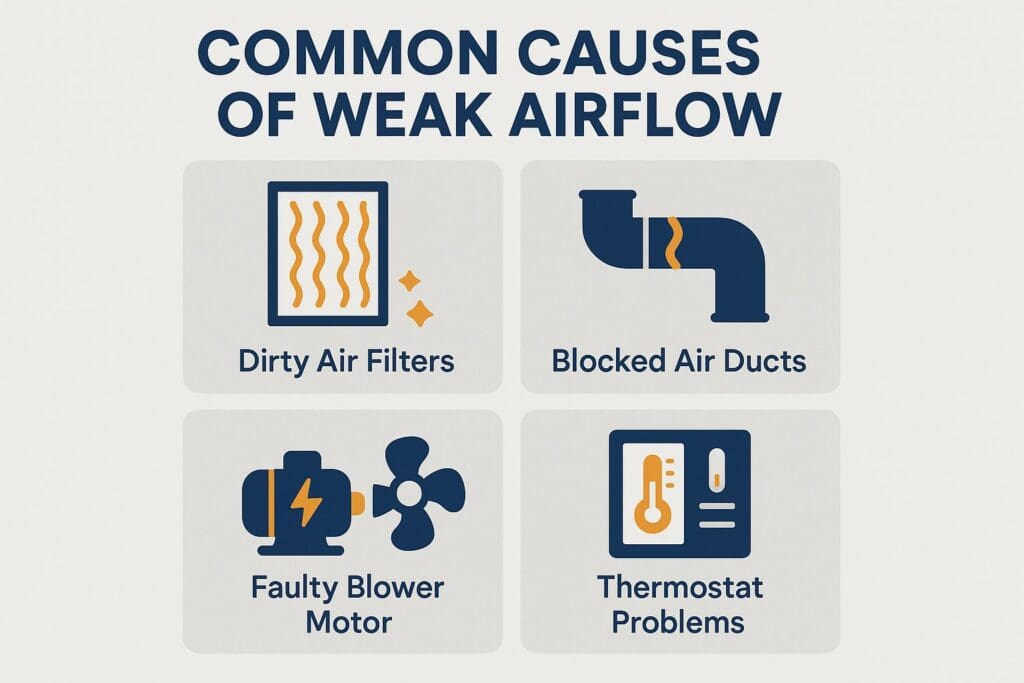
Dirty Air Filters
Dirty air filters can restrict airflow by up to 50%, causing your HVAC system to work harder, increasing energy consumption, and leading to higher energy bills.
Check your air filters every month to confirm they are working correctly. Change them every 1-3 months based on how often you use them and the type of filter.
High-efficiency filters might last longer, while standard fiberglass filters typically require more frequent changes. Dirty filters cause higher energy use and can make systems overheat or break.
Try using apps like FilterEasy that track when it’s time to change your filters. This helps keep your HVAC system in good condition, reducing energy bills and avoiding costly repairs.
Blocked Air Ducts
Blocked air ducts can hinder airflow, resulting in cold spots and significantly reduced system efficiency.
Blocked ducts often occur due to debris like dust and pet hair, or issues with the duct layout, such as tight bends or sections that are undersized.
Regular inspections, ideally once a year, help identify these problems early, ensuring system longevity.
For effective maintenance, consider using a portable vacuum with a hose attachment to clean visible duct openings, or hire professionals equipped with specialized duct cleaning tools.
Investing in an air filter replacement schedule can also prevent dust buildup, ensuring a healthier environment and improved HVAC performance.
Faulty Blower Motor
A broken blower motor can cause poor airflow, which interrupts cooling and reduces comfort.
Common symptoms of a faulty blower motor include unusual noises, inconsistent airflow, and overheating. If you notice grinding or squealing sounds, it may indicate worn bearings.
Regular diagnostic checks can identify these issues early. Perform these checks every six months. Look for damage, check electrical connections, and test how the motor works.
- Look for damage.
- Check electrical connections.
- Test how the motor works.
Tools like a multimeter can help measure voltage and resistance.
Looking after these practices extends the life of your blower motor and ensures your HVAC system functions properly.
Refrigerant Issues
Low refrigerant levels can drastically reduce cooling efficiency, often resulting from leaks or insufficient charging during service.
To detect refrigerant issues, start by examining your air conditioning system for temperature disparities. If one area of your home feels significantly warmer than others, it may indicate low refrigerant.
Listen for unusual hissing or bubbling sounds, which can signal a leak. To check refrigerant levels and find leaks, a certified technician should carefully inspect the system.
They typically use tools like a refrigerant gauge and electronic leak detectors, ensuring your system is restored to optimal performance.
Thermostat Problems
Faulty thermostats can misread indoor temperatures, leading to inconsistent airflow and discomfort throughout your home.
To fix the issue, first look at the thermostat settings to see if it’s set up right. If the issue persists, replace the batteries for models that require them.
A thermostat like the Nest or Ecobee lets you control it from a distance and learns your habits, helping you reduce energy use.
Installation typically takes under an hour, and they often provide diagnostic information that can help you identify issues before they escalate.
Regular upkeep, like cleaning the sensor and setting the device correctly, can stop problems from happening later.
Fixes You Can Try Today
A few simple changes can quickly and effectively improve weak airflow problems. Curious about how much HVAC might cost in 2025? Understanding future costs can help you plan your home improvement projects more effectively.
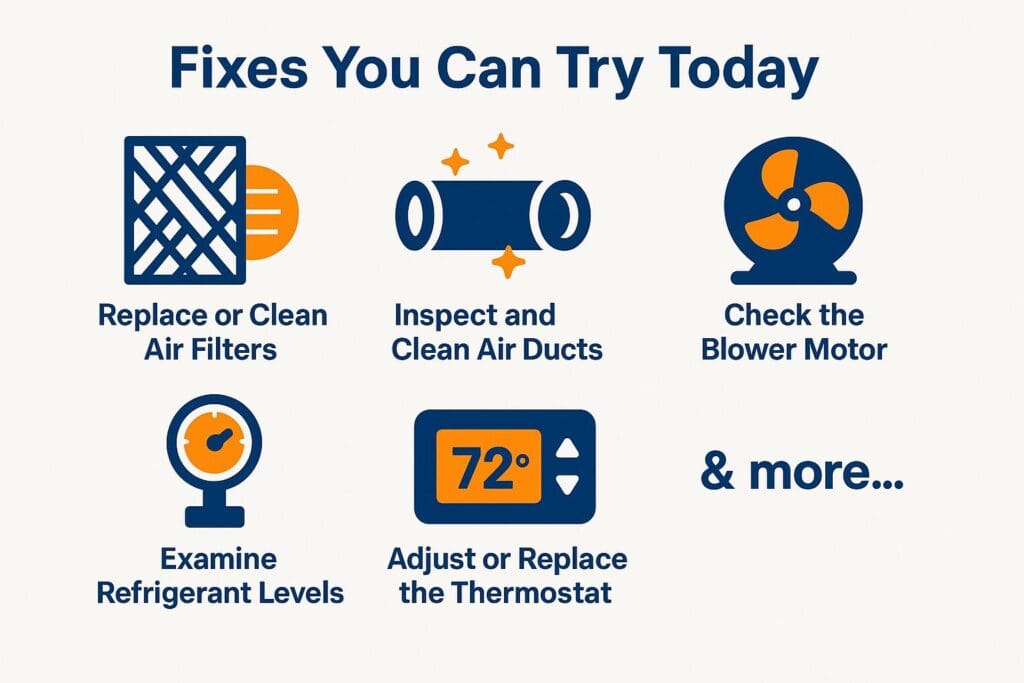
1. Replace or Clean Air Filters
Replacing or cleaning air filters every 1-3 months can improve airflow and make the system more efficient.
- First, figure out which filter your system uses. HEPA filters are great for people with allergies because they catch 99.97% of particles. Fiberglass filters are usually less effective but are cheaper and easier to get.
- Purchase filters from home improvement stores like Home Depot or online platforms such as Amazon.
- To replace, turn off your HVAC system, remove the old filter, insert the new one with the airflow arrow pointing in the correct direction, and turn the system back on.
- Cleaning reusable filters can be done by gently washing them with mild soap and water.
2. Inspect and Clean Air Ducts
Checking and cleaning air ducts regularly can improve airflow and stop dust and dirt from causing clogs.
To effectively clean air ducts, start by creating a plan. Use a vacuum with a brush attachment to dislodge dirt and debris, ensuring you cover all vents and registers.
Replacing air filters frequently, around every 1-3 months, helps maintain steady airflow. To keep your space really clean, think about getting a professional cleaning service every 3 to 5 years. They often use special equipment that reaches deep into the ducts, ensuring they are completely cleaned.
Tools such as the Honeywell HEPA filter are great for reducing contaminants in your home.
3. Check the Blower Motor
Regularly checking your blower motor can help identify issues before they escalate and affect airflow.
To access your blower motor, locate it within your HVAC system-often found near the air handler or furnace. Inspect the motor for unusual noises, signs of wear, like frayed wires, or physical damage, such as rust.
A subtle increase in your energy bills may also indicate inefficiency. If you see ongoing problems or don’t feel confident doing maintenance, think about hiring a professional technician for a detailed check and possible repair.
Regular maintenance can avoid costly breakdowns and extend the life of your system.
4. Examine Refrigerant Levels
It’s important to keep an eye on refrigerant levels. Call an HVAC technician if the levels drop or if you think there might be a leak.
To recognize refrigerant issues, regularly inspect your HVAC system for signs such as diminished cooling efficiency or ice buildup on the evaporator coil. If you notice these symptoms, immediately turn off the system to prevent damage.
Document any changes in airflow or temperature variations, and communicate these details to your licensed technician. Attempting DIY repairs can lead to further complications and potential health risks due to the toxic nature of certain refrigerants.
Always choose a certified technician for changes to guarantee safety and follow environmental impact regulations.
5. Adjust or Replace the Thermostat
Adjusting or replacing a malfunctioning thermostat can restore optimal airflow control and improve comfort levels.
Start by checking the thermostat’s batteries or settings, as simple adjustments can resolve many issues. Make sure the temperature is adjusted properly and the device is on either ‘heat’ or ‘cool’ mode, depending on what you need.
If problems persist, inspect the wiring and connections or consider upgrading. Thermostats such as Nest or Ecobee improve energy use by remembering your routine and adjusting thermostat settings on their own.
While installation can cost $100-$300, the energy savings can lead to a return on investment within a year.
6. Clear Debris Around the Outdoor Unit
Removing debris around your outdoor AC unit can improve airflow and make cooling work better.
To maintain optimal performance and air circulation, clear away leaves, branches, and grass clippings within a 2-foot radius of the unit.
Regularly check for blockages during peak summer months, as debris can accumulate quickly. Tools like a simple rake or vacuum can make this task easier.
Setting a monthly reminder can help you stay on top of maintenance. Make sure there is enough air circulation by keeping flowers and shrubs away from the unit.
7. Ensure Vents Are Open and Unblocked
Make sure all air vents are completely open and clear of blockages to improve airflow throughout your home.
To check vents for blockages, start by inspecting behind furniture. Move any items that may hinder air distribution, like sofas or chairs, away from the vents.
Next, adjust the direction of the vents-aim them toward the center of the room to promote even distribution. Consider using a flashlight to inspect inside the vent for dust buildup.
Regularly cleaning or vacuuming the vents helps maintain optimal airflow. Cleaning your heating and cooling systems regularly can improve operational efficiency, saving you money on energy costs.
8. Schedule Regular Maintenance
Scheduling regular HVAC maintenance, including system inspection and service check, can prevent airflow issues and prolong the lifespan of your system.
To maintain optimal performance, schedule HVAC inspections, including seasonal maintenance, at least twice a year-ideally in spring and fall.
During these visits, technicians will check refrigerant levels, clean coils, and inspect electrical components. For example, a professional will clean the evaporator and condenser coils, which can improve efficiency by up to 30%. They will check how air moves and change the air filters to keep the air inside clean.
Sticking to this schedule keeps things running smoothly and catches small problems before they turn into expensive repairs.
9. Inspect Insulation in Ductwork
Inspecting ductwork insulation can help identify energy loss due to leakage and improve overall HVAC efficiency.
Start by visually examining the insulation for signs of wear, such as fraying, cracks, or moisture damage.
Feel for air leaks around the seams or joints, using duct sealing techniques to mitigate energy loss.
Use a moisture meter to check areas near heating ducts, focusing on places where condensation might occur, indicating potential humidity control issues.
If you find major damage or think there are big leaks, reach out to a licensed HVAC expert for fixes. They can perform a thorough evaluation, ensuring that insulation meets current standards and enhancing your system’s performance.
10. Consider Upgrading Your AC Unit
If your AC unit is more than 10 years old, getting a newer model can improve cooling system efficiency and air distribution.
When considering an upgrade, evaluate the SEER (Seasonal Energy Efficiency Ratio) ratings, as higher ratings indicate better efficiency. Look for models with SEER ratings above 16, which can significantly reduce energy bills.
Consider installation costs and inquire about potential rebates or tax credits, which can offset the initial investment. For instance, Energy Star-qualified units often qualify for rebates that vary by state.
Be sure to consult with a certified HVAC technician to assess your home’s specific needs and recommend the optimal system.
When to Call a Professional
Knowing when to call a professional service can save time, money, and extend the life of your HVAC system. To help you make informed decisions, you might want to explore the best HVAC systems for 2025, which provide insights into the latest advancements and features that could optimize your setup.
Signs You Need Expert Help
Unusual noises, frequent cycling, and poor cooling performance are clear indicators that you should consult an HVAC professional.
Other signs include inconsistent temperatures across different rooms, a sudden increase in energy bills, or noticeable humidity issues.
For instance, if one area feels warm while another is chilly, it may indicate ductwork problems or a failing thermostat. If your system frequently turns on and off, this could point to a faulty compressor or thermostat settings needing adjustment.
Act now-fixing these problems quickly can prevent expensive repair costs later.
Choosing the Right HVAC Technician
Selecting a qualified HVAC technician requires checking credentials, reviews, and obtaining multiple quotes.
Begin by asking potential technicians about their certifications, specifically whether they are EPA-certified and licensed in your state, ensuring expert advice.
Inquire about insurance coverage, as this protects you in case of accidents. Review online testimonials and verify their quality through platforms like Yelp or Angie’s List.
Request detailed estimates from at least three technicians, ensuring they outline parts and labor, including preventative measures.
Ask about their experience with your specific HVAC system type to assess their suitability for your needs.
Recap of Key Points
To keep air moving well, regularly inspect your system, fix problems right away, and know when to hire an expert.
It’s important to check your air filters each month to prevent blockages that can reduce airflow. Replace them every 1-3 months based on usage frequency.
Check your ducts for any signs of leaks or obstructions, as these can significantly impede airflow. Use tools like duct tape for sealing or an airflow meter to perform accurate tests.
If your HVAC system keeps having problems, think about arranging for a professional to check it. This will help keep it running well and last longer.
About the Author
Mark Ellington is a home improvement expert and CEO of a $50M remodeling firm. With 20+ years of experience and a degree in Construction Management from Purdue, he shares practical renovation tips, pricing insights, and contractor advice at 5Estimates.com to help homeowners make smart, informed decisions on their projects.