


Can You Install Solar Panels Yourself? 5 Reasons Why You May Need a Pro
Thinking of going solar? Before you grab your tools, consider this: installing solar panels isn’t just about nailing a few brackets. It’s a complex process requiring technical know-how, knowledge of local regulations, and safety precautions. You’ll find out why hiring a professional could be the smartest choice, from learning about system design to handling permits and warranties. Curious about the risks of a DIY approach? Let’s look into and learn the details about putting in solar panels.
Overview of Solar Panel Installation and Roof Mounting
Setting up solar panels requires choosing the correct setup, getting the necessary approvals, and knowing your energy requirements to get the best performance.
The first step is to carefully check your roof to see if it’s fit for solar panels and assess your roof conditions. Check for shading from trees or buildings, and evaluate the structure’s orientation and angle.
Next, design your system by calculating your average energy consumption and identifying the appropriate panel type, such as monocrystalline for higher efficiency or polycrystalline for cost savings. Think about using energy monitoring tools for detailed planning.
Get through the permitting process by reaching out to local authorities and following the rules. Think about hiring a certified installer, as they usually make these steps easier, ensuring the best setup and performance. Curious about how much solar installation might cost? Our insights on national averages for 2025 can guide your financial planning.
Importance of Professional Help and Consultation Services
Installing solar panels yourself is an option, but hiring professionals makes sure your system meets local rules and works well.
Figuring out how to set up solar panels can be hard because of electrical regulations and the need for construction permits. Professionals are well-versed in these regulations, minimizing the risk of fines or project delays.
Many licensed installers provide guarantees on both the work they do and the equipment, ensuring solar panel lifespan and giving confidence that your system will work well for a long time.
For example, hiring a trained installer can reduce installation time by half, ensuring your system is up and running quickly while you focus on enjoying the benefits of renewable energy.
Learning About Solar Panel Setup and Linking to the Electrical Network

Knowing the various kinds of solar panels and their installation process helps in making informed decisions.
Types of Solar Panels and Energy Output
There are primarily three types of solar panels: monocrystalline, polycrystalline, and thin-film, each varying in efficiency and cost.
Monocrystalline panels, like those from Canadian Solar, are highly efficient, achieving up to 22%, but tend to be pricier. In contrast, polycrystalline panels, such as Trina Solar, offer a more budget-friendly option with efficiencies ranging from 15-20%.
Thin-film panels, like those made by First Solar, have an efficiency rate of 10-13%. While they are not as efficient as other options, they are lighter and flexible, which makes them useful for specific purposes.
When selecting a panel type, consider your budget, available space, energy needs, and solar panel optimization to find the optimal fit for your solar project. This approach aligns with the principles outlined in our analysis of how much solar installation costs in 2025.
Installation Process Overview and Installation Complexity
The installation process typically involves site assessment, design, obtaining permits, and finally installing the panels and connecting the system.
- Begin with a site assessment, which costs between $200 and $500, detailing space and sunlight exposure.
- Next, work on system design, selecting appropriate solar panel types and sizes.
- Obtain necessary permits, which vary by location, ensuring local regulations are followed.
- Once approved, the installation can take 1 to 3 days, requiring tools such as a drill, wrenches, and safety equipment.
- Carefully connecting wires and testing the system is essential for optimal performance.
- Make sure all tasks meet safety rules and instructions.
Reason 1: Need for Technical Skills and Solar Installation Training
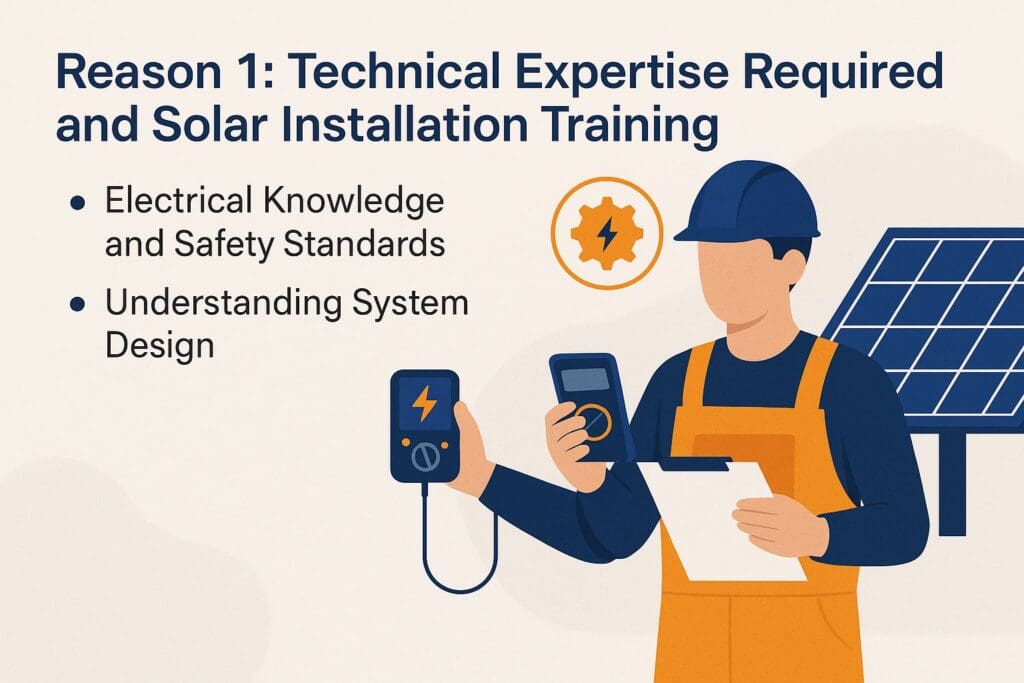
Putting in solar panels needs both technical skill and practical know-how, particularly about electrical systems and safety rules.
Electrical Knowledge and Safety Standards
Knowing how electrical systems work is important; for instance, knowing about wiring and voltage is necessary for installing things safely. Utilizing electrical safety standards reduces risks.
Following safety rules, like those in the National Electrical Code (NEC), is important to avoid risks such as electric shocks or fires. Before beginning any installation, confirm that all components are compliant with local regulations.
Getting certifications like NABCEP shows that installers know the best methods for renewable energy systems. Always use proper tools, such as insulated wire strippers and voltage testers, to mitigate risks.
Regularly going over safety guidelines can help improve skills in handling electrical projects successfully.
Understanding System Design
Creating a good system requires figuring out how much energy is needed, how to position the panels, and considering how shadows will affect energy output.
To start, use tools like PVWatts to estimate the energy output based on your geographic location and system parameters.
Next, consider HelioScope for detailed modeling; it visualizes panel layouts and accounts for shading from nearby objects.
Hiring an experienced installer can help your designs meet local regulations and suit your particular environment, enhancing system design efficiency.
Engaging an expert also helps in selecting optimal components, such as inverters and battery storage options, that maximize efficiency and longevity.
Reason 2: Permitting and Regulations and Building Codes
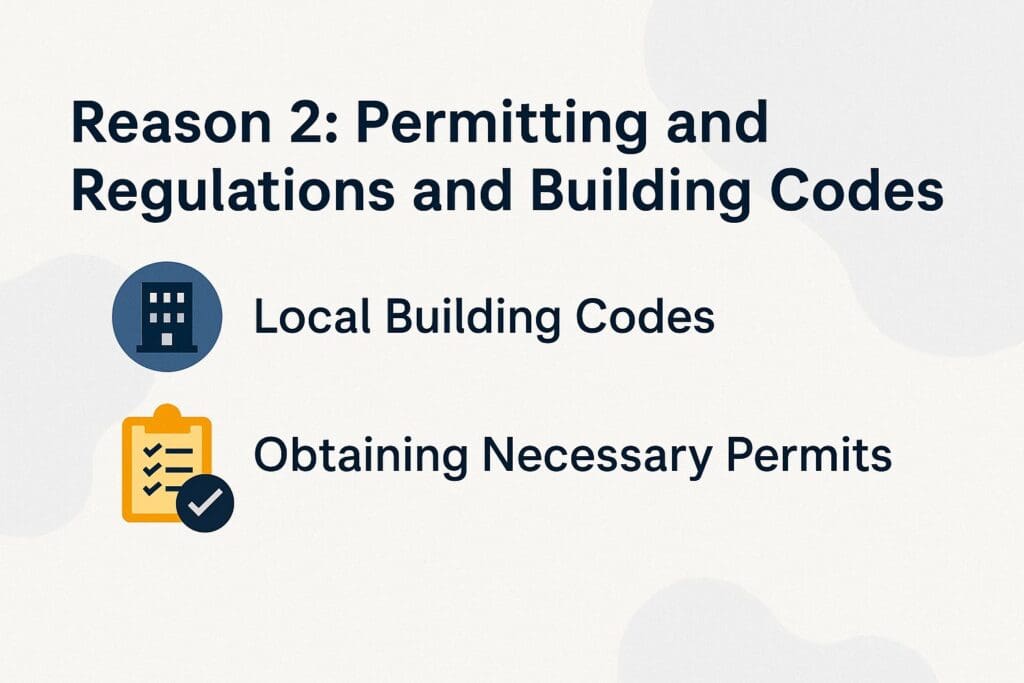
Dealing with permits and local rules can be difficult and take up a lot of time, often creating big challenges for DIY projects.
Local Building Codes
Local building codes dictate specific requirements for solar installations, which can vary by city or state.
To understand local building codes properly, begin by checking resources such as the International Code Council (ICC) website or your city’s planning department.
Common restrictions may include:
- Setback requirements
- Height limits
- Zoning regulations for solar panels
For example, some places might need panels to be set up at a specific angle to make the best use of sunlight or have rules on how they look, especially in historical areas.
Connecting with local experts can give information on rules and help make the approval process easier.
Obtaining Necessary Permits
Obtaining the necessary permits can add considerable time to your installation timeline, often requiring detailed plans and inspections.
Start by identifying the types of permits you need: electrical, structural, or plumbing. Costs vary, typically ranging from $50 for minor electrical permits to $500 for major structural work.
To make the process easier, make a list with your plans, contractor information, and materials.
Consider hiring a permit service or a professional contractor familiar with local regulations; this can save you time and potential pitfalls. A well-structured method can guide you through the complications of the permitting process more easily.
Reason 3: Time and Efficiency and Installation Timeframe

Saving time is important; doing tasks on your own can take more time than hiring experts who have faster ways of working.
Time Commitment for DIY Installation
Installing a solar panel system on your own can take anywhere from a couple of days to a few weeks, based on your skill level and the difficulty of the system.
To simplify the process, divide it into smaller steps.
- First, allocate approximately 1-2 days for research on local regulations and solar panel types.
- Next, spend another 1-3 days purchasing your materials, which may include solar panels, inverters, and mounting hardware.
- Assembly typically takes 2-4 days, depending on the complexity of your chosen setup.
- Allow a day for connecting the system and troubleshooting any issues.
Throughout, use guides available on platforms like YouTube or DIY forums for specific advice and effective methods.
High Professional Skill and Quickness and Professional Experience
Professional installers can complete solar panel projects in days rather than weeks, thanks to their experience and resources.
They use lasers and drones to examine sites, ensuring layouts are accurate and panels are placed correctly.
Professional teams often include licensed electricians and certified technicians, allowing for quicker and more efficient installations, minimizing potential pitfalls.
While a typical DIY project may take 2-3 weeks to get permits and find enough help, professional services can make things faster, often finishing installations in just 2-3 days.
This efficiency saves time and often produces more energy from the system thanks to expert input.
Reason 4: Warranty and Insurance Considerations and Risk Management

Knowing about warranties and insurance coverage is important for protecting your investment in solar technology.
Manufacturer Warranties and Installation Mistakes
Most manufacturers offer warranties ranging from 10 to 25 years on solar panels, protecting against defects and performance issues, thus securing return on investment.
It’s important to know the details of these warranties.
For example, SunPower provides a 25-year combined warranty that covers both product and performance, ensuring panels maintain at least 92% efficiency after 25 years. Meanwhile, LG offers a similar 25-year warranty but with a focus on product reliability.
It’s essential to review terms such as coverage of labor costs and conditions that may void warranties. Having this information helps consumers make informed decisions and protects them in the long run.
Liability and Insurance Coverage
Homeowners should have enough liability insurance because incorrect installation can cause damage to property and create safety risks, highlighting their homeowner responsibilities.
Getting a homeowners insurance policy is important to guard against these risks, including safety concerns, and usually costs between $1,000 to $1,500 each year.
Consider adding personal liability coverage, which averages $100 to $300 per year, to safeguard against accidents occurring on your property, emphasizing solar energy benefits.
Without this insurance, you might have to pay a lot of money if someone gets hurt or if your property is harmed because of something you did wrong, affecting your property’s value.
Consulting with an insurance agent can help tailor a policy that matches your specific needs and risks, considering climate considerations.
Reason 5: Safety Risks
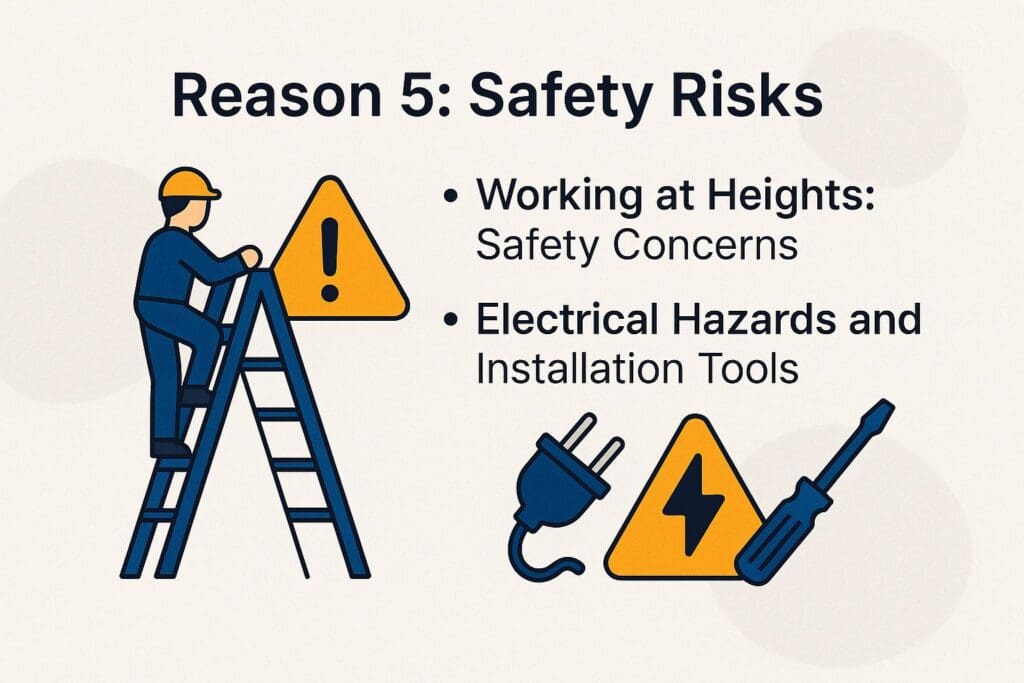
It’s important to keep safety in mind when installing solar panels because working on roofs and handling electrical components can be risky.
Working at Heights: Safety Concerns
Putting solar panels on roofs needs specific training and installation tools to keep workers safe and avoid accidents.
Workers need detailed training on how to stop falls, use ladders correctly, and wear harnesses as per OSHA regulations to stay safe.
It’s crucial to have the right equipment; for instance, a personal safety setup needs a full-body harness and a lanyard. Make sure you know the weight limits of ladders and check that they are safe to use.
Regular safety checks and practice exercises can strengthen good practices and get teams ready for possible dangers on-site, greatly reducing risks linked to rooftop installations, aligning with regulatory requirements.
Electrical Hazards and Installation Tools
Electrical hazards are a major cause of injuries in solar installations. Knowing how electrical systems work and proper electrical work can help reduce these risks.
To improve safety, put a few key measures in place. Start by doing regular checks to find possible dangers in your setup.
Use voltage testers to check circuits before touching any parts to make sure they are not live. Equip your team with personal protective equipment (PPE), such as insulated gloves and safety glasses.
Set up a clear communication plan for emergencies so workers can quickly react to any incidents. By adopting these practices, you can significantly reduce the likelihood of electrical accidents during solar installations.
Final Thoughts on DIY Solar Installation
Think about your own technical knowledge and local rules before starting a DIY solar setup to prevent expensive errors.
Start by evaluating your technical proficiency. If you have experience with electrical systems or relevant DIY projects, you may be able to handle the solar panel installation.
Next, research your local regulations regarding solar panel installation, as some areas require solar permits or inspections.
Tools you may need include:
- a multimeter for electrical testing,
- a ladder for roof access,
- and safety gear.
Check local community resources or forums where people have shared their DIY projects to avoid mistakes and make your project easier.
Advice to Get Expert Help for Installation
Hiring an experienced professional to handle installations simplifies the process and ensures it is completed safely and correctly.
Research shows that homes with professionally installed systems experience 30% fewer issues compared to DIY installations. Professionals are taught to adhere to local rules, making sure safety guidelines are followed, improving energy savings assessments.
For example, when installing a security system, hiring a professional can make sure everything functions correctly, lowering the risk of hardware problems.
Many professionals offer warranties, which can save you from costly repairs down the line. Investing in expert help for your solar panel benefits usually leads to a more reliable and secure setup.
Resources for Further Information and Installation Guides
For those wanting to learn more about solar technology, DIY solar installation, and professional installation, many resources are available.
Important sources are the Solar Energy Industries Association (SEIA), which provides plenty of information on policy and solar market trends, and EnergySage, recognized for its detailed guides on solar installation and financing options.
Look for local workshops or seminars in your area, often hosted by community colleges or environmental organizations, to gain hands-on experience and understand solar incentives.
Websites like SolarPowerRocks also offer information specific to each state, including economic considerations. Using these resources can significantly improve your practical knowledge of solar energy systems. For those curious about the financial aspect, see also the projected solar installation costs for 2025, which can help you plan your solar investment more effectively.

About the Author
Mark Ellington is a home improvement expert and CEO of a $50M remodeling firm. With 20+ years of experience and a degree in Construction Management from Purdue, he shares practical renovation tips, pricing insights, and contractor advice at 5Estimates.com to help homeowners make smart, informed decisions on their projects.

Leave a Reply