


How to Replace a Light Switch
A flickering light switch can be more than just a nuisance; it may indicate a need for light switch repair; it can pose safety risks too. Learning to replace it on your own helps you save money and makes you confident in handling home repairs. This guide covers essential tools for replacing switch, electrical safety precautions, and step-by-step instructions for removing the old switch and installing a new one. Ready to brighten up your space? Let’s dive in!
Tools for Replacing Switch and Materials Needed
Having the right tools is important for an easy and safe light switch installation, especially for DIY home improvement. However, it’s crucial to recognize potential risks involved in DIY electrical projects. This approach aligns with the principles outlined in our analysis of The Dangers of DIY Electrical Work: When to Call…
Essential Tools for Home Electrical Projects
To replace a light switch, you need basic tools like a voltage tester to make sure the power is off, wire strippers to get the wires ready, and a screwdriver to take off the switch cover, ensuring switch installation tips are followed.
Besides these basics, think about including a pair of pliers for holding wires and a flashlight for lighting up dark areas during home wiring tasks.
Before starting the switch replacement, turn off the circuit at the breaker box and double-check with your voltage tester to confirm no power is flowing, adhering to circuit interruption protocols.
Once you’re ready, use your wire strippers to remove about half an inch of insulation from each wire. Connect the new switch by matching the wires to their original positions, and use your screwdriver to tighten everything firmly for a safe installation, making sure the wires are correctly arranged.
Replacement Switch Options
Pick from different replacement switch types, like toggle switches for $10 each for simple use, or dimmer switches for $25 to control lighting levels, considering switch market options.
Starting at about $40, these advanced switches have many functions. You can use apps on your phone to control them, and they are compatible with home automation systems.
Toggle switches are best for simple on/off applications, typically used in closets or garages where dimming isn’t necessary, highlighting switch design simplicity.
In contrast, dimmers add ambiance to living rooms or dining areas, enhancing comfort and saving energy by reducing brightness.
Smart switches let people reduce energy use and control lighting schedules remotely, helping to save energy. Each option brings unique energy-saving features, so choose based on your needs.
Safety Precautions
Paying attention to safety precautions when putting in a light switch is important to prevent electrical hazards and finish the job correctly. For an extensive analysis of related costs, our comprehensive study on electrician charges in 2025 provides valuable insights.
Power Disconnection and Circuit Testing
Before starting any electrical job, make sure to turn off the power at the breaker panel to avoid accidental shock, complying with electrical codes.
Start by locating the breaker panel in your home. Once found, identify the breaker that corresponds to the circuit you’ll be working on; typically, it’s labeled. Switch the breaker to the ‘off’ position.
To verify that the power is indeed off, use a non-contact voltage tester on the outlet to check for any electrical flow. Skipping this important step can cause serious injuries or deadly accidents, highlighting the need for a complete safety check before starting any electrical work.
Using Safety Gear for Electrical Connections
Using proper safety gear, such as insulated gloves and safety glasses, is important for your protection when doing electrical work.
Insulated gloves ($20) stop electrical shocks by creating a protective layer between your skin and live wires, which is important when working with electrical circuit parts.
Safety glasses ($10) protect your eyes from flying debris, which is important when cutting wires or drilling.
Non-conductive shoes ($40) prevent electric shocks by blocking ground currents. For example, a colleague suffered a minor shock while handling live wires due to wearing improper footwear.
Buying these important items keeps you safe and makes your workplace safer too.
Removing the Old Switch and Switch Connection
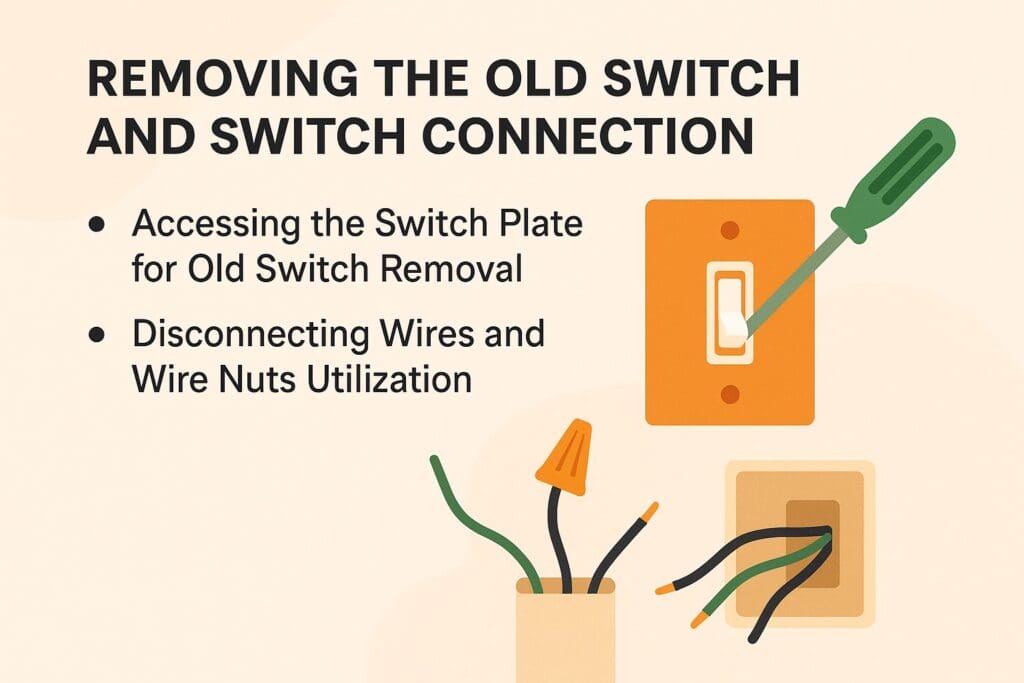
Removing the old switch properly is necessary before installing a new one.
Make sure to manage all wires properly.
Accessing the Switch Plate for Old Switch Removal
To access the switch, use a screwdriver to remove the screws securing the switch plate and gently pull it away from the wall.
Once the switch plate is loose, take care to support it so it doesn’t damage the wall. Keep a container or magnetic tray handy to hold the screws; this prevents them from getting lost.
Check for any loose paint or debris that might hinder reinstallation. If the plate is stubborn, gently wiggle it back and forth rather than forcing it off.
This process only takes a few minutes, making it easy to prepare for maintenance jobs or change parts.
Disconnecting Wires and Wire Nuts Utilization
After removing the switch plate, carefully disconnect the wires from the old switch and remember their arrangement for connecting the new one.
To stay safe when disconnecting, start by switching off the power at the circuit breaker.
Then, using a screwdriver, gently untwist the wire connectors. It’s helpful to take a photo as a reference for reinstallation. If the wires are not color-coded, label them with masking tape.
For those not in use, you can wrap exposed ends in electrical tape to prevent accidental contact.
Once completed, you’re ready to connect the new switch with the wires in the exact order they were originally connected.
Installing the New Switch and Light Switch Function
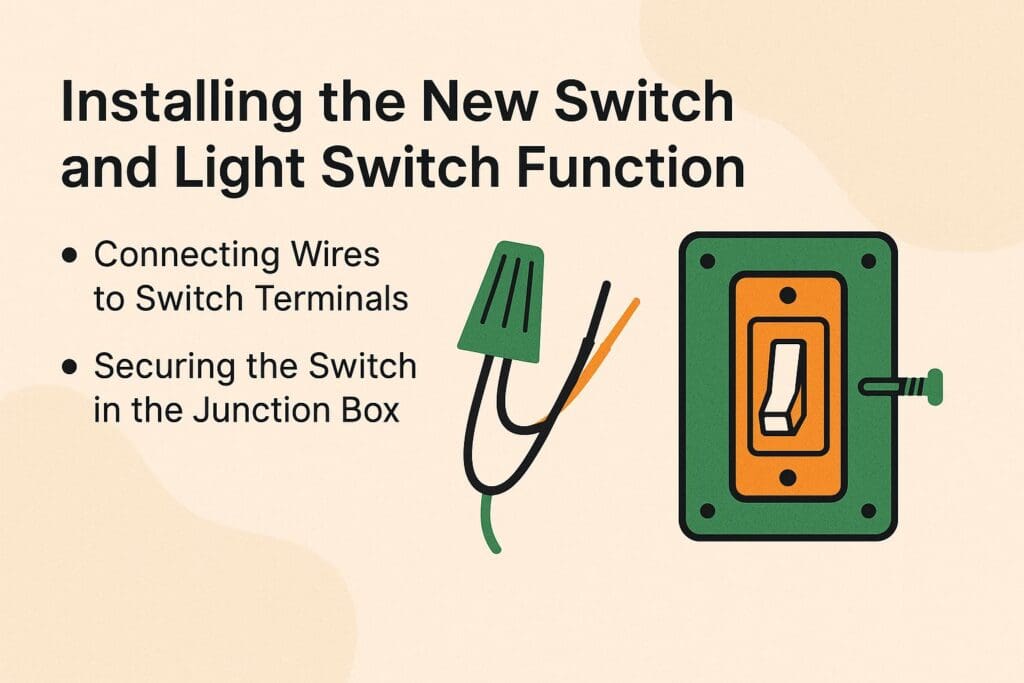
Installing a new switch correctly is necessary to keep your electrical system functioning properly and safely.
Worth exploring: How Much Do Electricians Cost To Install a Ceiling Fan? to understand potential costs involved in upgrading electrical fixtures.
Connecting Wires to Switch Terminals
Correctly connecting the wires to the new switch involves matching the wire colors and securing them to the appropriate terminal screws.
- Begin by identifying the wire colors: typically, the black wire is hot, white is neutral, and green or bare is ground.
- Strip about half an inch of insulation from each wire end to expose the copper. Next, attach the black wire to the brass terminal, the white wire to the silver terminal, and connect the ground wire to the green terminal, ensuring correct switch orientation.
- Make sure each connection is secure to avoid electrical shorts. Once all wires are secured, carefully tuck them into the box and attach the switch faceplate.
- Always turn off power at the breaker before starting this process for your safety.
Securing the Switch in the Junction Box
Once all wires are connected, secure the switch back into the switch box, ensuring it fits snugly and is flush with the wall, following electrical installation standards.
Begin by gently pushing the switch into the box while aligning it with the screws. Next, use a screwdriver to tighten the screws without over-tightening, as this can damage the switch.
Make sure the switch operates smoothly before you replace the switch plate. Reconnect the switch plate, ensuring it fits evenly against the wall.
This process improves safety and gives your electrical setup a tidy and professional appearance.
Testing the New Switch and Troubleshooting Switches
After installing the new switch, test it to make sure it works properly and is safe in your electrical system.
Begin by restoring power at the breaker. Turn the switch on and off a few times to check functionality.
Carefully observe the switch for any unusual heat; it should remain cool to the touch. Watch for flickering lights, which could indicate a wiring issue.
If issues occur, check your connections thoroughly and make sure the switch works with your lighting setup. If you keep having problems, talk to a licensed electrician to prevent safety risks. Those curious about related safety considerations might appreciate our guide on furnace replacement costs and safety.
Finishing Touches and Switch Assembly

To finish putting in your light switch, put on the switch cover and check that it functions correctly.
Replacing the Switch Plate for Electrical Repair
To finish the installation, carefully replace the switch plate, ensuring all screws are tightened but not over-tightened.
Begin by aligning the switch plate over the outlet or switch, ensuring the holes match with the screws. Gently press the plate against the wall to avoid any gaps.
Use a screwdriver to insert the screws, tightening them firmly but stopping short of applying excessive force, which can crack the plate.
For a neat appearance, wipe the area around the plate before attaching it to remove dust or smudges. Double-check your work by ensuring the switch functions correctly, and that the plate is flush against the wall.
Final Safety Check and Switch Performance Verification
It’s important to do a final safety check after installation to confirm that everything operates properly and is secure.
- Begin by ensuring all connections are tight, checking that wires aren’t frayed or exposed.
- Use a multimeter to test electrical connections for proper voltage. Verify that any switches or breakers operate smoothly and reset without issues.
- Inspect the installation area for any residual tools or materials that could pose hazards, ensuring adherence to electrical codes.
Write down the steps for installation. Note any problems you faced and how you solved them. Keep this for later use. This improves safety and helps with later repairs or improvements.
About the Author
Mark Ellington is a home improvement expert and CEO of a $50M remodeling firm. With 20+ years of experience and a degree in Construction Management from Purdue, he shares practical renovation tips, pricing insights, and contractor advice at 5Estimates.com to help homeowners make smart, informed decisions on their projects.

Leave a Reply